Banda Aceh, September 23, 2026 – Lecturers from the Chemistry Department, Faculty of Mathematics and Natural Sciences (FMIPA), Universitas Syiah Kuala (USK) conducted a Community Service Program (Pengabdian kepada Masyarakat/PkM) through a training session on the preparation of acid-base indicator paper from natural materials for members of the Chemistry Subject Teachers’ Association (MGMP) of Senior High Schools across Aceh Besar, on Wednesday (September 23, 2026). The activity was part of the Chemistry Department’s commitment to strengthening teachers’ competencies while promoting innovative Chemistry learning based on the potential of natural resources available in the surrounding environment.
Held at the FMIPA USK Senate Room and Chemistry Laboratory, the program carried the theme “Turning Limitations into Innovation: Utilizing Local Natural Materials for Chemistry Practicals in Senior High Schools in Aceh Besar.” Through this theme, the community service program aimed to provide teachers with both theoretical insights and hands-on experience in utilizing readily available natural materials as alternative resources for Chemistry practical activities in schools.
The activity began with participant registration, followed by an opening session led by Tasya Ulfika, M.Si. The event continued with remarks from the Chair of the Chemistry MGMP, Ade Lianita, S.T., followed by an introduction to the Chemistry Department of FMIPA USK delivered by Head of the Chemistry Department, Dr. Khairi, M.Si.
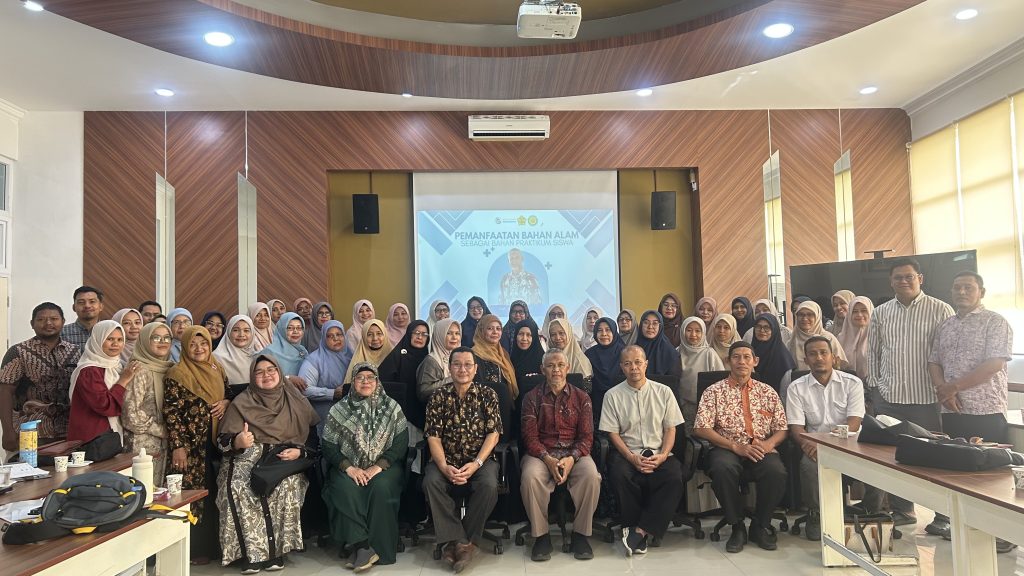
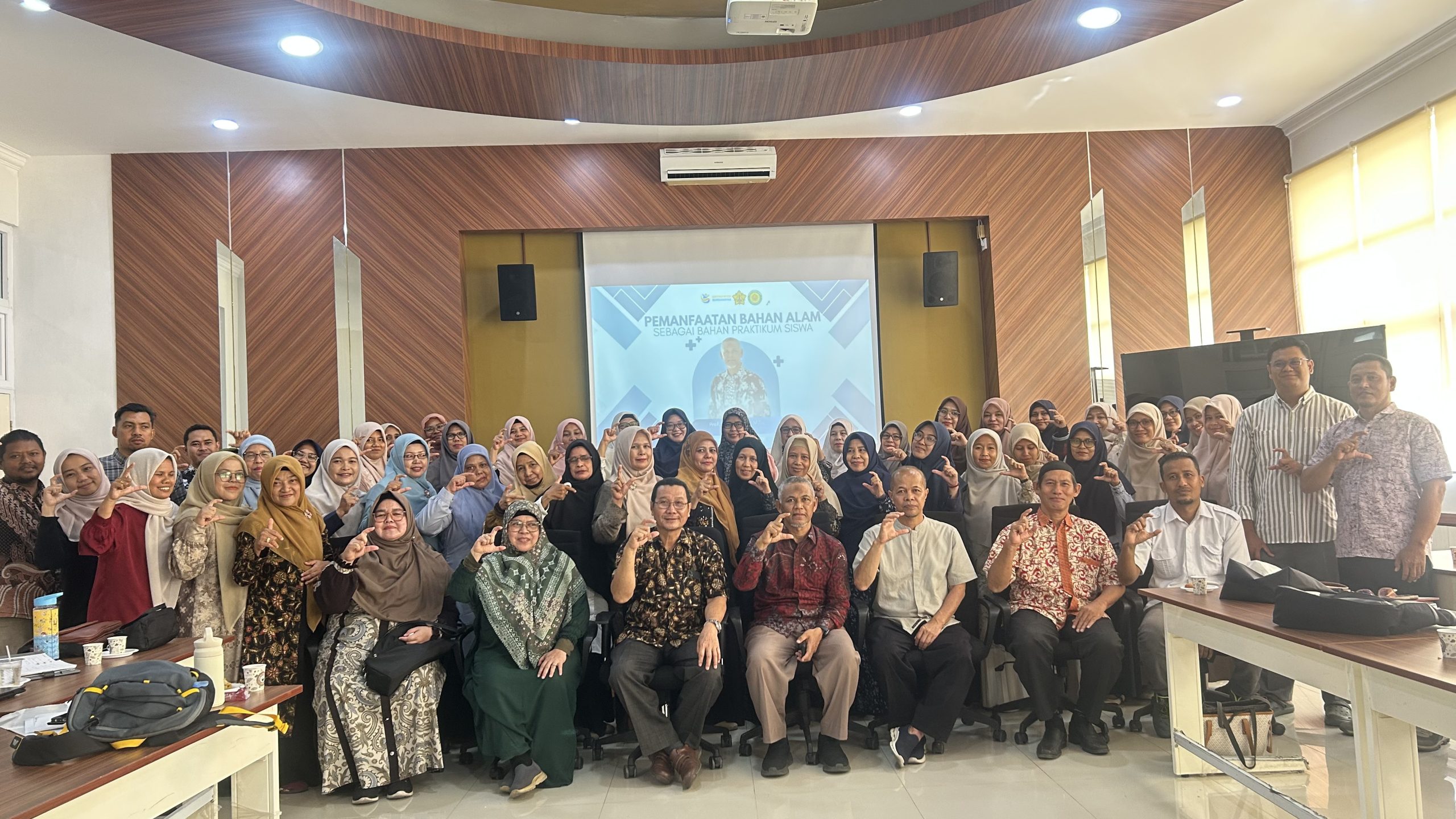
The opening session was followed by remarks and the official opening of the program by Dean of FMIPA USK, Prof. Dr. rer. nat. Ilham Maulana, S.Si. After the opening session and a group photograph, the participants proceeded to the main session featuring Prof. Dr. Mustanir, M.Si. as the speaker.
In his session, Prof. Mustanir presented the topic “Turning Limitations into Innovation: Utilizing Local Natural Materials for Chemistry Practicals in Senior High Schools in Aceh Besar.” The presentation highlighted the importance of creativity and innovation in developing practical learning activities, particularly through the utilization of natural materials available in the surrounding environment.
Through this approach, teachers were encouraged not to view limitations in materials or laboratory resources as obstacles to conducting practical learning. Instead, such limitations can become opportunities to develop practical experiments that are simple, creative, and capable of helping students understand Chemistry concepts in a contextual manner.
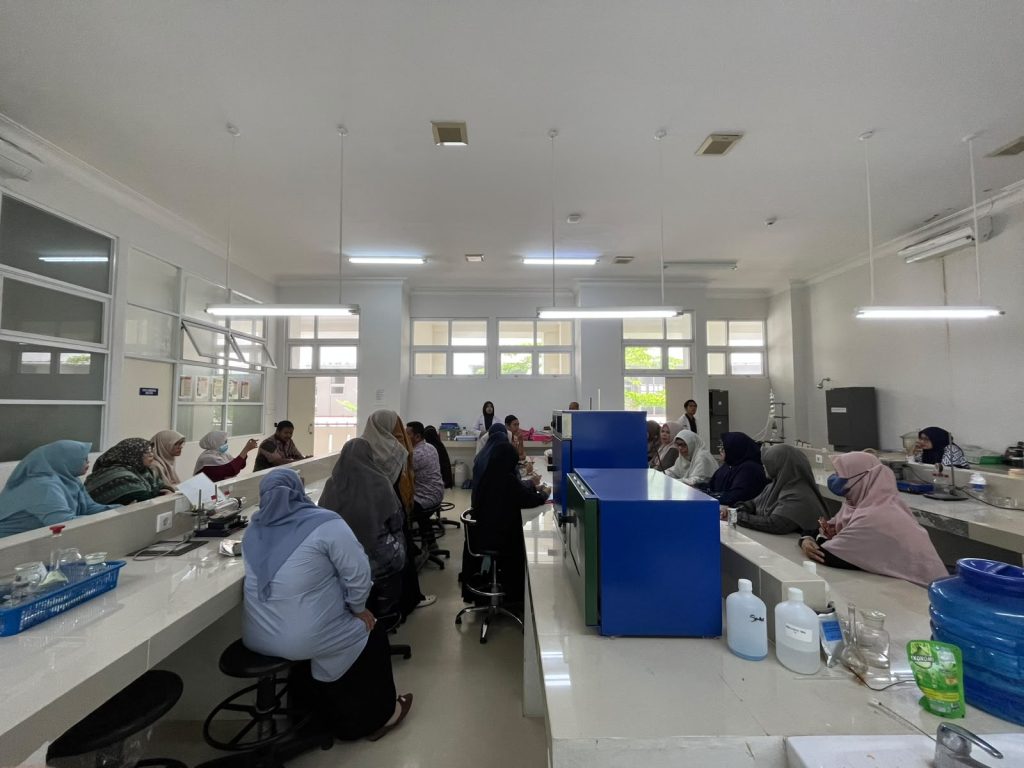
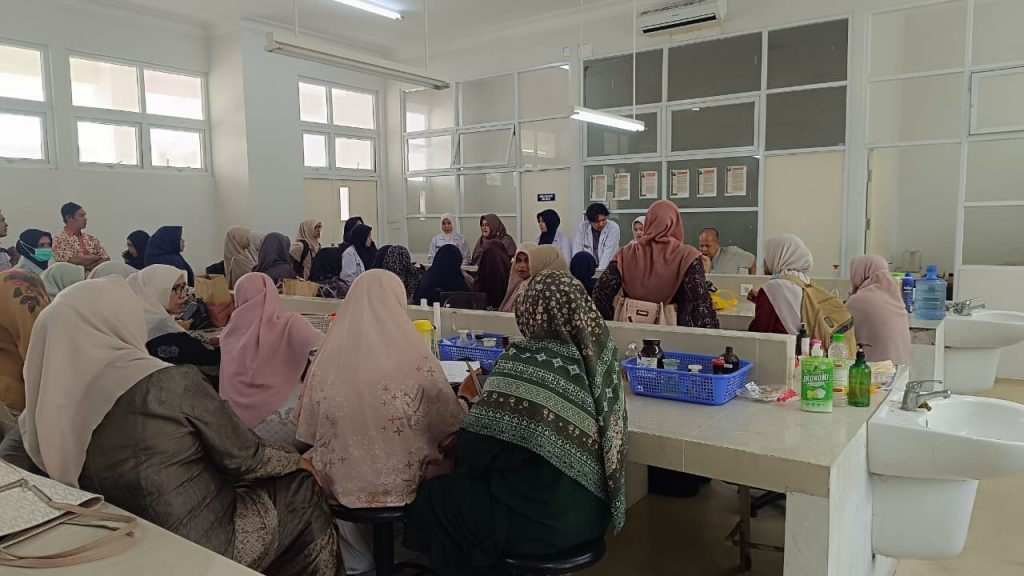
Following the introductory session, participants took part in a hands-on practical activity in the Chemistry Laboratory. One of the main activities was the preparation of acid-base indicator paper using natural extracts, namely butterfly pea flowers, turmeric, dragon fruit, and purple cabbage. These four natural materials were introduced as sources of natural indicators capable of producing color changes when used to test solutions with different acidic and basic properties.
During the practical session, participants prepared indicator paper using each natural extract and subsequently used the resulting papers to test various solutions and observe the color changes. Through this hands-on experience, teachers gained practical knowledge of how materials that are easily found in the surrounding environment can be developed into simple, engaging, and applicable Chemistry learning media.
The use of butterfly pea flowers, turmeric, dragon fruit, and purple cabbage also provided participants with an opportunity to observe and compare the characteristic color changes produced by different natural materials. This experience is expected to inspire teachers to develop a wider range of practical activities based on the availability and potential of natural materials in their respective school environments.
Thus, the practical activity served not only as an experimental exercise but also as a means of connecting Chemistry concepts with phenomena encountered in everyday life. This approach is expected to help teachers create Chemistry learning experiences that are more contextual while providing students with more engaging practical learning opportunities.
Following the practical session, the activity continued with a discussion of the practical results, facilitated by Prof. Dr. Binawati Ginting, M.Si. The discussion provided an opportunity for participants to review their observations and explore various possibilities for developing natural materials as Chemistry practical learning resources. It also served as a platform for lecturers from the Chemistry Department and Chemistry teachers to exchange experiences regarding the implementation of practical learning at the senior high school level.
Contributing to the Sustainable Development Goals
As a Community Service Program conducted by lecturers of the Chemistry Department, FMIPA USK, the training was not merely focused on knowledge transfer but also on applying Chemistry expertise to provide direct benefits to the educational community. Collaboration with the Chemistry MGMP of Senior High Schools across Aceh Besar is expected to strengthen cooperation between higher education institutions and schools in developing innovative and environmentally relevant Chemistry learning.
The program also contributes to the achievement of the Sustainable Development Goals (SDGs), particularly SDG 4 – Quality Education, through strengthening teachers’ competencies and promoting practical-based Chemistry learning.
In addition, the activity is relevant to SDG 12 – Responsible Consumption and Production through the utilization of natural materials such as butterfly pea flowers, turmeric, dragon fruit, and purple cabbage as alternative sources of indicators for practical learning. The use of materials available in the surrounding environment encourages creativity in developing learning resources while introducing the use of local resources in educational activities.
The program also supports SDG 17 – Partnerships for the Goals through collaboration between the Chemistry Department of FMIPA USK and the Chemistry MGMP of Senior High Schools across Aceh Besar. This partnership plays an important role in strengthening connections between higher education and schools, particularly through the sharing of knowledge, experience, and innovation to support the improvement of Chemistry education.
Through this program, the Chemistry Department of FMIPA USK continues to demonstrate its commitment to fulfilling the Tri Dharma of Higher Education, particularly through community service activities that provide meaningful contributions to the educational community. The utilization of natural materials as sources of acid-base indicators is expected to become one of the practical learning innovations that can be further developed and implemented by teachers in their respective schools.
The activity concluded with a group documentation session involving the community service team and participants. The program further strengthened the collaboration between the Chemistry Department of FMIPA USK and the Chemistry MGMP of Senior High Schools across Aceh Besar in supporting the development of Chemistry learning that is creative, applicable, innovative, and closely connected to the potential of the surrounding environment.